
"Arabian hospitality"
200 article(s) found

A brief introduction to the origin, development, history and culture of Galapagos boutique coffee beans
The Arabian Coffee Tree was first introduced to Ecuador in 1952 and its coffee is of good quality, especially the coffee harvested in early June. Ecuadorian coffee beans can be divided into two varieties: Galapagos and Gigante, both of which have the characteristics of large granules and heavy weight. Ecuadorian coffee can be divided into first class (No.1) and super excellent (Extra Superior) according to its quality.

A brief introduction to the description of flavor and flavor characteristics of Galapagos boutique coffee beans with balanced acidity
In 1875, 340 years after Freitoma de Belanga discovered the island, a native named Kovos came to St. Cristobal, where he established the Hasunda Coffee Garden and planted about 100 hectares of Arabian bourbon coffee trees. As the plantation is located between 140m and 275m above sea level, the climate is equivalent to that between 915m and 1830 m in the interior.

Aromatic and aromatic Ecuadorian fine coffee beans Flavor Taste Aroma Description Introduction
It wasn't until the early 1990s that the Gonzalez family bought Hassenda Coffee Plantation. Local microclimates, intense equatorial sunlight and rapid temperature changes (43 ° C at sea level and 10 ° C to 16 ° C at 275 m above sea level) caused by the Humboldt Current provided unique favorable conditions for the Gonzalez family to expand.

Ecuadorian coffee
Coffee origin: the Ecuadorian Arabian Coffee Tree was first introduced to Ecuador (Ecuador) in 1952 and its coffee quality is very good, especially the coffee harvested in early June. Ecuadorian coffee beans can be divided into two varieties: Galapagos and Gigante, both of which have the characteristics of large granules and heavy weight. Ecuadorian coffee can be divided into first class (No.1) and special coffee according to quality.

A brief introduction to the description of flavor and aroma characteristics of Galapagos boutique coffee beans with sweet in sour
In 1875, 340 years after Freitoma de Belanga discovered the island, a native named Kovos came to St. Cristobal, where he established the Hasunda Coffee Garden and planted about 100 hectares of Arabian bourbon coffee trees. As the plantation is located between 140m and 275m above sea level, the climate is equivalent to that between 915m and 1830 m in the interior.

Ecuador coffee flavor producing area Manor Introduction Fine coffee processing method Processing method
In 1875, 340 years after Frei Thomas de Berlanga discovered the island, an indigenous man named Cobos arrived on San Cristobal Island, where he established the Hassenda Coffee Plantation and planted about 100 hectares of Arabic bourbon trees. Because the plantation is located between 140 meters and 275 meters above sea level, the climate is equivalent to the climate between 915 meters and 1830 meters inland.

A brief introduction to the market price of balanced and refreshing Ecuadorian boutique coffee beans
Because of the unique role of the Galapagos Islands in the course of history, the Government of Ecuador has designated the Galapagos Islands as a national park, the land is no longer allowed to be reclaimed as new agricultural land, and the introduction and use of chemical fertilizers, pesticides, herbicides and other chemicals are strictly prohibited, so coffee produced in the Galapagos Islands is recognized as a natural product. Ecuador ES Coffee South Ecuador

A brief introduction to the planting Market Price of Galapagos Fine Coffee Bean varieties with slight Flower and Fruit fragrance
The Arabian Coffee Tree was first introduced to Ecuador in 1952 and its coffee is of good quality, especially the coffee harvested in early June. Ecuadorian coffee beans can be divided into two varieties: Galapagos and Gigante, both of which have the characteristics of large particles and heavy weight. Ecuadorian coffee can be divided into first class (No.1) and super excellent (Extra) according to its quality.

Ecuador Coffee Flavor Characteristics Variety Producing Area Taste Treatment Method Planting Environment Introduction
In 1875, 340 years after Frei Thomas de Berlanga discovered the island, an indigenous man named Cobos arrived on San Cristobal Island, where he established the Hassenda Coffee Plantation and planted about 100 hectares of Arabic bourbon trees. Because the plantation is located between 140 meters and 275 meters above sea level, the climate is equivalent to the climate between 915 meters and 1830 meters inland.

Galapagos Fine Coffee Origin Manor Flavor Taste Introduction
As coffee is consumed around the world, the world coffee industry moves toward mass production, and San Cristobal's smaller and less reliable coffee industry is in trouble and may eventually be forced to give up without profit. It wasn't until the early 1990s that the Gonzalez family bought Hassenda Coffee Plantation. Humboldt Current
How to make Arabica coffee siphon pot coffee powder proportion what do you need to make your own coffee
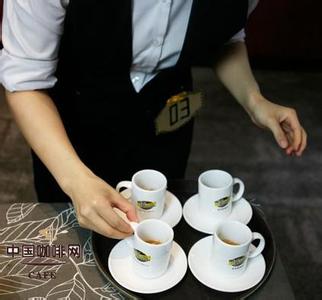
How to make Arabica Coffee siphon pot Coffee Powder ratio what do you need to make your own Coffee? as the first place in the world to drink and produce coffee, Arab coffee culture is as old and old as its coffee history. In the Arab region, people still retain antiquity in drinking coffee in terms of coffee quality, drinking mode, drinking environment and atmosphere.

How to make deep-baked coffee powder-description of how Arabica coffee is cooked
In Arab countries, if a person is invited to someone else's house for coffee, it shows the most sincere respect of the host, and the invited guests should express their heartfelt gratitude and response. When guests come to the host's house, they should be courteous and courteous. When tasting coffee, they should not only praise the coffee.

A brief introduction to the history and culture of the origin and development of Galapagos boutique coffee beans with a faint fragrance of flowers and fruit
The Arabian Coffee Tree was first introduced to Ecuador in 1952 and its coffee is of good quality, especially the coffee harvested in early June. Ecuadorian coffee beans can be divided into two varieties: Galapagos and Gigante, both of which have the characteristics of large particles and heavy weight. Ecuadorian coffee can be divided into first class (No.1) and super excellent (Extra) according to its quality.

The taste of Ecuadorian coffee beans is very balanced and refreshing. Introduction to the characteristics of Shengke Manor.
St. Cristobal is a larger island in the Galapagos archipelago. At 410m above sea level, there is a small lake called El.Junco, which forms streams along the rocks and volcanic rocks on the southern slope of the island. Mineral-rich fresh water moistens the land of St. Cristobal, keeping the soil moist and fertile. For here.

Brief introduction of planting varieties of Fine Coffee in Chateau Flavor producing area of Ecuador
Because of the unique role of the Galapagos Islands in the course of history, the Government of Ecuador has designated the Galapagos Islands as a national park, the land is no longer allowed to be reclaimed as new agricultural land, and the introduction and use of chemical fertilizers, pesticides, herbicides and other chemicals are strictly prohibited, so coffee produced in the Galapagos Islands is recognized as a natural product. Ecuador ES Coffee South Ecuador
Coffee knowledge Coffee cultures around the world
According to historical records, coffee was first planted in Taiwan in 1884, which opened the prelude to the development of coffee in China. The earliest coffee cultivation in mainland China began in Yunnan, when a French missionary brought the first coffee seedlings to Binluchuan County in Yunnan Province at the beginning of the 20th century. For nearly a hundred years after that, coffee was only a star in the vast territory of China.

Introduction to Santa Cruz Manor on Santa Cruz Island, Galapagos Islands
St. Cristobal is a larger island in the Galapagos archipelago. At 410m above sea level, there is a small lake called El.Junco, which forms streams along the rocks and volcanic rocks on the southern slope of the island. Mineral-rich fresh water moistens the land of St. Cristobal, keeping the soil moist and fertile. For here.

Taste of Ecuadorian Coffee introduction to Galapagos Coffee in Manor area
St. Cristobal is a larger island in the Galapagos archipelago. At 410m above sea level, there is a small lake called El.Junco, which forms streams along the rocks and volcanic rocks on the southern slope of the island. Mineral-rich fresh water moistens the land of St. Cristobal, keeping the soil moist and fertile. For here.

Balanced acidity and fragrant Ecuadorian coffee introduces the San Cristobal Galapagos group.
St. Cristobal is a larger island in the Galapagos archipelago. At 410m above sea level, there is a small lake called El.Junco, which forms streams along the rocks and volcanic rocks on the southern slope of the island. Mineral-rich fresh water moistens the land of St. Cristobal, keeping the soil moist and fertile. For here.

Introduction of grinding scale in taste producing area of Ecuadorian coffee with characteristic flavor description method
Ecuadorian coffee beans feature c well-known brands in South America, Ecuadorian A-grade coffee, with a large state-run seed value garden; 100% from the natural vegetation zone of 1300-2000 meters highlands, popular in Europe and the United States, and taste the exquisite world-class Arabica Arabica flavor at supermarket prices. ES Coffee is a clean organic coffee grown on the slopes of the Andes in Latin America. It's 100%.